Showing posts with label Culture. Show all posts

Monday, January 13, 2014

[Movie] The Yokohama Fire Department shows off it's disaster response ability at a New Year's event/Kanagawa

Translated from the original article at: http://news.kanaloco.jp/localnews/article/1401120012/

January 12, 2014
The New Year's event of the Yokohama Fire Department.

On the 12th, the Yokohama Fire Department's New Year's event was held at the Yokohama Red Brick Warehouse event plaza. According to one of the sponsors, 78,000 people attended.

[Movies]

At the event, firefighter band drills and old-style Japanese ladder acrobatics were performed. Under the scenario that a major earthquake occurred, all of the firefighters performed a response drill, showing off their ability to deal with disasters. Visitors saw vehicles they may not usually encounter, such as special trucks, fire boats and helicopters. They were able to feel what it's like to be in close proximity as they observed the firefighters carrying out rescue operations.


Original text:
【動画】横浜消防が出初め式、災害対応力をアピール/神奈川
2014年1月12日

横浜消防出初め式

横浜消防出初め式が12日、横浜市中区の横浜赤レンガ倉庫イベント広場で行われ、約7万8千人(主催者調べ)が訪れた。

【動画】

会場では、はしご乗りなどの古式消防演技や消防音楽隊ドリル演技、巨大地震を想定した総合訓練などが行われ、災害への対応力をアピールした。来場者は普段見られない特殊車両や消防艇、消防ヘリを間近に感じながら消防職員らの救出作業に見入っていた。

Monday, December 30, 2013

A big success among locals: The "daruma city" at Dairokuten Temple/Chigasaki

Translated from the original article at: http://news.kanaloco.jp/localnews/article/1312280011/

December 28, 2013
All lined up together, a "city" of various sized darumas=Dairokuten Temple

The Daruma City, an annual end of the year tradition, was held on the 27th at the Dairokuten Temple in San-Chome, Jukkenzaka, Chigasaki City. Daruma of various sizes were lined up, as locals packed the area to purchase them for use in the New Year.

According to the temple, the annual event began over 50 years ago. This is said to be the only place to find a "daruma city" within Chigasaki. This year, 10 daruma stores from Hiratsuka City gathered for the event, also selling shimenawa decorative ropes and household Shinto altars.

To sell their Darumas, shopkeepers struck flint stones while dancing and yelling out "Yoooiyoi!" as they prayed for safety in their homes and success in business.

As a family of 6 approached the shops, a local female (age 65) said with a smile "Even though I buy lucky amulets at the super markets, I still shop at the daruma city each year. I wish to pray for the health of children as I decorate with them."


Original text:
地元客で盛況、第六天神社で「だるま市」/茅ケ崎
2013年12月28日

さまざまな大きさのだるまがずらりと並んだ市=第六天神社

年末の恒例行事「だるま市」が27日、茅ケ崎市十間坂3丁目の第六天神社で開かれた。さまざまな大きさのだるまがずらりと並び、正月用品を買い求める地元客らでにぎわった。

同神社によると、50年ほど前から毎年行われており、市内で開催されるだるま市はこの1カ所だけという。今年は平塚市のだるま店など10店ほどが集まり、しめ縄飾りや神棚なども販売された。

だるまが売れると、店員が火打ち石を鳴らしながら「ヨヨヨイヨイ」と威勢のいい掛け声と手拍子で、家内安全や商売繁盛などを祈願した。

家族6人で訪れた近くに住む女性(65)は「スーパーでも買えるけど、縁起ものなので毎年だるま市で購入している。子どもたちの健康を願って飾りたい」と笑顔で話した。

Sunday, December 22, 2013

[Movie] A lighting test at Samukawa Temple, for a nebuta float that welcomes the New Year with a legend/Kanagawa

Translated from the original article at: http://news.kanaloco.jp/localnews/article/1312200043/

December 20, 2013
The nebuta float of Samukawa Temple, set up for a lighting test.

At Samukawa Temple (Miyayamai, Samukawa-Cho, Chief Priest: Tone Yasunori) the annual welcoming of the New Year with a float featuring a legend, was set up on the 20th at the shrine's gates. It's been set to light up on 12:00 AM, New Years Day.

[Movies]

This year's theme is Ama No Iwato (Cave of the Sun God). Aomori prefecture's nebuta artist, Kitamura Renmei, spent three months on it's creation. During the process, he poured in his wishes for people to seek and embrace hope for Japanese economic revival during the dawning of each day, as well as to take one steady step at a time towards a happy 2014.

The nebuta is 9 meters wide, 2.6 meters tall and 1.7 meters deep. The float's 250 light bulbs giving off an eerie glow, the lighting tests are performed in the evenings. The float will remain lit at night until February 3rd of next year, welcoming visitors to the shrine.


Original text:
【動画】神話ねぶたで正月出迎え、寒川神社で試験点灯/神奈川
2013年12月20日

試験点灯された寒川神社のねぶた

寒川神社(寒川町宮山、利根康教宮司)で恒例の迎春神話ねぶたが20日、神門に設置され、元日午前0時の点灯へ準備が整った。

【動画】

今年のテーマは「天の岩屋戸(いわと)」。青森ねぶた師の北村蓮明さんが約3カ月かけて制作。経済回復の兆しが見える日本の夜明けに希望を抱き、着実な一歩を踏み出し幸せな一年になるよう、願いが込められている。

ねぶたは幅9メートル、高さ約2.6メートル、奥行き1.7メートル。試験点灯した夕暮れ時には、約250個の電球が幻想的な光を放った。来年2月3日まで夜間に点灯され、参拝客らを出迎える。

Sunday, December 8, 2013

Shrine Maidens quietly craft evil warding arrows. The final rush of production for January begins at the Hachimanguu Temple/Kamakura

Translated from the original article at: http://news.kanaloco.jp/localnews/article/1312020024/

December 3, 2013
'Mikoshi' (shrine maidens) silently continue their work of creating evil-warding arrows=Hachimanguu Temple

At the Hachimanguu Temple (Yuki No Shita, Kamakura City), the production of evil warding arrows, a lucky amulet for New Years, enters it's final rush. Using bamboo and the feathers of waterfowl within Japan, 245,000 arrows of various sizes are being produced until Mid-December.

As the mikoshi quietly continued their work, the banging of kabura whistles and the sound of decorative bells being attached to the arrows could be heard echoing through the silent temple.

To celebrate the occasion of Minomoto no Yoriyoshi using the arrows of Hachimanguu Temple to end the Zenkunen War, Kyōtō's Iwashimizu-Kachimanguu Shrine sent over their bow(s) and arrow(s) as an offering.


Original text:
巫女が黙々と破魔矢作り 正月控えて鶴岡八幡宮で追い込み/鎌倉
2013年12月3日

黙々と破魔矢作りの作業を続ける巫女たち=鶴岡八幡宮

鶴岡八幡宮(鎌倉市雪ノ下)で正月の縁起物の破魔矢作りが追い込みに入っている。国産の竹や水鳥の羽根を使用し、今月中旬までに、大小合わせて24万5千本を製作する。

巫女(みこ)らは、「コンコン」と矢の先端に鏑(かぶら)を付ける音や飾りの鈴の音が静かに響く中、黙々と作業を続けていた。

同八幡宮の破魔矢は源頼義が前九年の役を平定した際に、京都の石清水八幡宮から授かった弓矢を奉納したことにちなむという。

Monday, September 2, 2013

In a five-variety kodaimai rice patty in Yuno-Cho’s Oosaku area, a giant frog appears in the field!

Translated from the original article at: http://headlines.yahoo.co.jp/hl?a=20130831-00010001-rtn-l26

Transmitted at 4:23 PM on Saturday, August 31 by the Ryoutan Daily Shinbun


The image of a frog floats over the rice field.

In a rice field in Yakuno-cho's Oosaku area, a giant frog has appeared. Amongst the five different varieties of kodaimai rice, the field serves as a canvas from which the frog can be floating on top of the "rice crop art". Each day the colors change, forming a nice display.

The Imoyama Club, a group of local nature and hiking enthusiasts went to work on creating the artwork. Led by the group’s president Iio Koyo, 50 members assembled. Enjoying rice cultivation, they became involved in exchanges with the city and its farming villages in 2006.

Until now, the group took on the task of creating bears, UFOs, and (local town character) Goya-Sensei. With the area being known as a spot to view scenes of the fall, each year, more and more people come from far away to pay a visit.

Planting took place on a 9-are wide rice field owned by President Iio. With this year marking the 50th anniversary of the organization, a frog was chosen through a public vote. With not enough members being recruited by the end of May, friends as far away as Kyoto, Osaka, and Nara called out for assistance, resulting in 70 people offering their cooperation. Ropes were laid down and stretched to form the outline image of the frog. From there, seeds of red, black, green, purple and habutae varieties of godaimai rice were planted.

Despite worries of the lingering intense heat causing a lack of hydration for the plants, growth was favorable, with the image beginning to appear one week ago.

"The growth of the red godaimai rice was slow. Looking at the weather from here on out, I think mid-September will be the best time to come see the crop. On the 22nd, people will be arriving to harvest the rice and plan to hold a harvest festival," said President Iio.


Original text:
夜久野町大岶地区の田んぼに巨大ガエル! 古代米など5種類で
両丹日日新聞 8月31日(土)16時23分配信

田んぼに浮かび上がったカエルの絵

福知山市夜久野町大岶地区の田んぼに、巨大ガエルが現れた。古代米など色が違う5種類の稲穂で、キャンバスに見立てた田に絵を浮かび上がらせる「田んぼアート」の作品。日ごとに色づき、見栄えが良くなっている。

地元を中心とした山登り愛好者約50人で組織している居母山クラブ(飯尾恒洋会長)が取り組んでいる。遊び心をもった稲作を通じて農村と都市の交流、地域活性化につなげようと、06年に始めた。

今までクマやUFO、ゴーヤ先生などを題材に取り組み、地域の秋の風物詩として定着し、遠方から毎年のように見学に来る人も増えている。

田んぼは飯尾会長の所有で、約9アールの広さ。結成50周年となる今年は公募した中からカエルを選び、5月下旬にメンバーだけでなく、親交がある京都、大阪、奈良など遠方の人たちにも声をかけ、約70人が協力して赤、黒、緑、紫、新羽二重の古代米の苗を、カエルの絵の輪郭に合わせて張ったロープを目印に植え付けた。

猛暑が続いて水不足が心配されたが、順調に育ち、1週間ほど前から絵が現れ始めた。

飯尾会長は「赤の古代米の生育が遅く、今後の天候にもよりますが、9月中旬が、一番の見ごろとなると思います。22日には田植えをした人たちも迎えて稲刈りをし、収獲祭を開く計画です」と話していた。

Thursday, August 15, 2013

The peak season for traditional octopus vase fishing, “Delicious food is coming from here on out”/Miura

Translated from the original article at: http://news.kanaloco.jp/localnews/article/1308120018/

August 13, 2013

Fisherman Yuu Yamamori pulls up one octopus vase after another=Miura City

The peak season for Octopus fishing has arrived. Using the ancient method of octopus vases, the octopi are caught by taking advantage of their habit of concealing themselves within rocky areas.

During the day, in the Kaneda fishing harbor area of Miura City, an octopus fishing boat floats on the calm ocean. There, fisherman Yuu Yamamori (Age 80) pulls a 15 meter rope up out of the water. Attached to the rope are 25 octopus vases, which likely have octopi inside half of them.

Octopus fishing usually begins in mid-July, but this year the season arrived about a month later than average. There were plenty of medium sized octopi brought up, weighing about 1 kilogram (2.20 pounds) each. "The octopi are healthy and have eggs. Things will get delicious from here!" Mr. Yamamori said with a smile.


Original text:
伝統のタコつぼ漁が最盛期、「これからがおいしい時期」/三浦
2013年8月13日

タコつぼを次々と引き上げる漁師の山森優さん=三浦市

岩間に潜り込むタコの習性を利用した、昔ながらのタコつぼ漁が最盛期を迎えている。

三浦市の金田漁港周辺では、波が穏やかな日にはタコを捕る船が浮かぶ。漁師の山森優さん(80)は、約15メートル間隔で縄に結ばれた25個のタコつぼを次々に引き上げる。入っている確率は2割程度。

ことしは例年よりも1カ月ほど遅い7月中旬から捕れ始めた。1キロ前後の中ダコが多いが、山森さんは「卵持ちがいたり、身も締まり、これからがおいしい時期」と笑顔を見せる。

Tuesday, August 13, 2013

Continuing a 300 year tradition, the heroic Toya Lion Dance/Sagamihara

Translated from the original article at: http://news.kanaloco.jp/localnews/article/1308100006/

August 11, 2013
The Toya Lion Dance.

On the 10th, a tradition continuing over 300 years took place at the Suwa Shrine of Toya, Midori Ward, Sagamihara. There, the Toya Lion Dance was performed in a religious dedication.

The dance depicted a family of a father, mother and son. Dancing to the sounds of a flute, 3 people covered in white robes and lion masks performed, their heads twisting concurrently to the music.

The Toya Lion Dance began during the Japan's Kanbun Period (1661-73), to be later appointed as an intangible cultural asset of the prefecture. Local high school students took on the task of performing as the lions.


Original text:
300年間続く伝統「鳥屋の獅子舞」勇壮に/相模原
2013年8月11日

鳥屋の獅子舞

相模原市緑区鳥屋の諏訪神社で10日、300年以上前から続くとされる伝統芸能「鳥屋の獅子舞」が奉納された。

父、母、息子3頭の獅子舞。笛の音が響くと、獅子頭をかぶった白衣姿の3人が、同時に頭をうねらせながら舞った。

獅子舞は寛文年間(1661~73年)ごろから始まったとされ、県無形民俗文化財に指定されている。獅子役は地元の高校生が務めている。

Monday, March 18, 2013

At the Oomiya Hikawa Shrine, a gagaku performance is held to memorialize and revive Eastern Japan’s disaster area.

Translated from the original article at: http://omiya.keizai.biz/headline/66/

March 11, 2013
In the music hall of Hikawa Shrine, a scene of the gagaku performance.

On March 11, at the Hikawa Shrine (Saitama-City, Ōmiya-ku, Takahanachō 4), (former) palace of (what used to be the) Musashi Province, a gagaku performance was held in offering to remember those sacrificed in the disaster of Eastern Japan and pray for the area's revival. Continuing since last year, this is the second time that event has been held at the shrine.


(Caption) A scene of the gagaku dedication (Related image)

At the moment of the disaster from  two years prior, everyone observed a period of silence. From there, the gagaku continued within the court hall. The program consisted of  "urayasu"dancing followed by  "ranryouou" dancing. During the urayasu, two miko (shrine maidens) prayed for peace and safety with a fan and bell dance. During the ranryouou, a man wearing a dragon's head mask performed a brave looking dance. The gagaku performance was finished in about an hour.


Original text:
東日本大震災の慰霊と復興の雅楽奉納演奏-大宮氷川神社
(2013年03月11日)

舞殿で演奏された雅楽の様子

武蔵一の宮・氷川神社(さいたま市大宮区高鼻町4)で3月11日、東日本大震災の犠牲者の慰霊と復興祈願で雅楽の奉納演奏が行われた。同神社での奉納演奏は昨年に続き2回目。

【画像】雅楽の奉納演奏の様子(関連画像)

東日本大震災の発生時間に合わせて全員で黙とうが行われ、続いて舞殿で雅楽の演奏が行われた。演目は、神楽が浦安舞、舞楽が蘭陵王の2演目。浦安舞では、2人の巫女(みこ)が平穏無事の願いを込めた扇舞と鈴舞を披露。蘭陵王では龍の頭を模した面を着けた男性が勇壮な舞を披露した。雅楽の奉納は1時間ほどで終了した。


Friday, February 15, 2013

(Movie) Praying for world peace and the nation's welfare at Chōshō-ji Temple's Daikokutōe Festival/Kamakura

Translated from the original article at: http://news.kanaloco.jp/localnews/article/1302110004/

February 11, 2013
At the Daikokutōe Festival, an ascetic ritual is performed in prayer of world peace and Japan's welfare=Chōshō-ji Temple, Kamakura

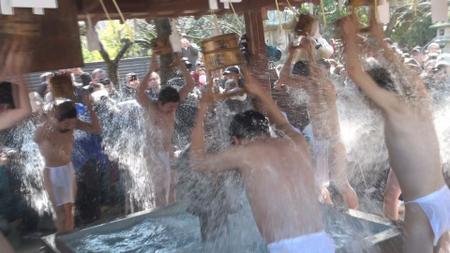
Wearing only a shimekomi (also called a fundoshi), monks cover themselves in freezing water while chanting a sutra, in prayer of world peace and Japan's welfare during the Daikokutōe Festival. It was held on the 11th at the Chōshō-ji Temple of Zaimokuza, Kamakura City.

For 100 days, from November until the arrival of the festival, the ascetic monks endured the practice of slurping on nothing but rice porridge day and night. Besides being forbidden from trimming their hair and beards, they weren't even allowed to clip their nails. Leading up to the festival, each day was spent dousing themselves in freezing water, wrapped only in white robes.

Original text:
【動画】世界平和と国の安泰を祈願、長勝寺で「大国祷会」/鎌倉
2013年2月11日

世界平和と国の安泰を祈願する荒行「大国祷会」=鎌倉・長勝寺

経文を唱えながら締め込み一つで冷水をかぶり、世界平和と国の安泰を祈願する荒行「大国祷会」が11日、鎌倉市材木座の長勝寺で行われた。

修行僧らは昨年11月から100日間、朝晩に粥(かゆ)をすするだけの苦行に耐え、この日を迎えた。髪やひげ、爪さえも切ることが許されず、白装束をまとい冷水をかぶる日々を送ってきた。

Monday, February 11, 2013

[Movie] At the Maru Yama Inari Shrine’s Hatsuuma Festival, shrine maidens dance in prayer of a rich harvest/Kamakura

Translated from the original article at: http://news.kanaloco.jp/localnews/article/1302090015/

February 9, 2013
Praying for harvest, Miko (shrine maidens) perform the "Yorozuyo No Mai" (Dance of Eternity)=Maru Yama Inari Shrine

On the 9th, at the Maru Yama Inari Shrine within Yuki No Shita, Kamakura City's Tsurugaoka-Hachimangū , the Hatsuuma Festival was held. (Hatsuuma is February’s first day of the horse, according to the Earthly Branches).


Before the start of the spring's farming operations, a Shinto ritual is held for the God of Food to pray for that year's harvest. A legend is told that in the year 711 (Year 4 of the Wadou Era), the Inari God appeared at Mitsugamine Cliff, located at the Fushimi Inari Head Shrine. Since then, the festival is held each year on the first Hatsuuma of February.

As the miko performed the Yorozuyo in offering, parishioners and visitors passed, one after another, to pray for success in their business.


Original text:
【動画】丸山稲荷社で初午祭、豊作祈願し巫女舞う/鎌倉
2013年2月9日

豊作を祈願し「萬代の舞」を奉納する巫女=丸山稲荷社

鎌倉市雪ノ下の鶴岡八幡宮境内にある丸山稲荷(いなり)社で9日、初午(はつうま)祭が行われた。

【動画】

春の農作業が開始する前に、今年一年の豊作を食物の神に祈願する神事で、和銅4(711)年に稲荷の神が伏見稲荷の三ケ峰に現れたとの言い伝えから、毎年2月の初午の日に開催されている。

巫女(みこ)による「萬代(よろずよ)の舞」が奉納され、氏子や参拝者が次々に商売繁盛などを祈願していた。

Friday, January 18, 2013

Figures clad in furisode carefully descend down the steps...Coming of Age Day’s first snowfall in 15 years/Kanagawa

Translated from the original article at: http://news.kanaloco.jp/localnews/article/1301140033/

January 14, 2013

The piling snow appearing slippery, young women wearing furisode carefully walk down the steps.=Taken on 12:45PM, January 14 at Yokohama Arena, Kohoku Ward, Yokohama City.

On the 14th, Coming of Age Day, Kanagawa became engulfed in a rough storm, with Yokohama seeing it's first snowfall of the year. According to the Yokohama Meteorological Observatory, the snowfall arrived 7 days later than average, while last year arriving 6 days early. The snowfall measured at a high of 13 centimeters, the first snowfall on Coming of Age Day since 1998, 15 years prior. Subway operators exchanged successive glances at each other, as roads and traffic continued to face delays and halts all day due to the chaotic weather.


The Coming of Age ceremony was located at Yokohama Arena, Kohoku Ward, Yokohama City. The piling snow appearing to be slippery, young women wearing furisode were seeing carefully descending the steps so as not to slip.


Original text:
振り袖姿で階段慎重に…15年ぶり雪の成人式/神奈川
2013年1月14日

積もった雪に滑らないように、振り袖姿で慎重に階段を下りる新成人ら=14日午後0時45分、横浜市港北区の横浜アリーナ

「成人の日」の14日、県内は大荒れとなり、横浜で初雪を観測した。横浜地方気象台によると、平年より7日遅く、昨年より6日早い。横浜の積雪は最大13センチで、成人の日に雪となるのは1998年以来15年ぶり。鉄道は運転見合わせが相次ぎ、道路も通行止めや渋滞が続くなど終日混乱した。

【動画】

成人式会場となった横浜市港北区の横浜アリーナでは、振り袖姿の新成人が、積もった雪に滑らないよう、慎重に階段を下りる姿が見られた。

Monday, January 14, 2013

(Video) Praying for a bountiful year at the Grand Shimenawa Festival. A 6 meter "centipede" is created/Kamakura

Translated from the original article at: http://news.kanaloco.jp/localnews/article/1301080008/

January 8, 2013
Praying for the year's harvest while standing under the new "centipede"=Hakusan Temple, Imaizumi, Kamakura City

On the 8th, at the Hakusan Temple of Imaizumi, Kamakura City, the Grand Shimenawa Festival was held, in prayer of safety and a rich harvest throughout the area.


Local residents of the area wrapped up straw, creating a 6 meter Shimenawa in the form of a centipede, said to be associated with Bishamonten (Vaiśravaṇa). It decorated the shrine ground’s entrance.

Until three years prior, a local rice paddy was producing the straw used for the Shimenawa. Because it's no longer there, it's said that this year, farmers of a glutinous rice field in Zama City took over the process of supplying the straw.


Original text:
【動画】大注連祭で豊年祈願、6メートルの「ムカデ」作る/鎌倉
2013年1月8日

新しい「ムカデ」の下で豊年を祈願=鎌倉市今泉の白山神社

鎌倉市今泉の白山神社で8日、豊作と地域の安全を祈願する「大注連祭」が行われた。

【動画】

地域の住民が、わらを編んで、毘沙門天の使いといわれるムカデを模した約6メートルの大しめ縄を作り、境内の入り口に掲げた。

3年前までは地元の田んぼのわらを使っていたが、田んぼがなくなったため、ことしは座間市の農家からもち米のわらを譲り受けたという。

Sunday, January 6, 2013

(Video) Praying for safety while swinging an adze, the Chouna Hajime ceremony of Tsurugaoka-Hachimangū shrine/ Kamakura

Translated from the original article at: http://news.kanaloco.jp/localnews/article/1301050005/

January 5, 2013
The Chouna Hajime Ceremony, an ancient carpentry ritual=Tsurugaoka-Hachimangū shrine

The year's ceremony for the safety of carpenters, the Chouna Hajime (Beginning with the adze) took place on the 4th, at Yuki No Shita, Kamakura City's Tsurugaoka-Hachimangū Shrine.

The Chouna Hajime traces back to 1181. When Minamoto No Yorimoto was nearly finished with the construction of the Hachiman Guu, there was an accident while transporting material from Yuigahama, spurning the ceremony. Now, it's a tradition within the city in beginning the year's carpentry work.

Area residents involved in construction clothed themselves in traditional Shinto ceremony outfits. After transporting a sacred tree into the kagura hall, they stood in front of it, waving an adze and handsaw. The ancient ritual in carpentry etiquette has once again been performed.


Original text:
【動画】手斧振るい安全祈願、鶴岡八幡宮で手斧始式/鎌倉
2013年1月5日

古式の大工作法を再現した手斧始式=鶴岡八幡宮

ことし1年の工事の安全を祈願する手斧始(ちょうなはじめ)式が4日、鎌倉市雪ノ下の鶴岡八幡宮で行われた。

1181年に源頼朝が八幡宮造営に際して、木材を由比ケ浜から運んだ故事にちなみ、現在では市内の工事の事始め式として伝えられている。

神事では伝統的な装束に身を包んだ地元の建設関係者らが、舞殿に運び込まれた御神木の前で手斧やのこぎりを振るい、古式の大工作法を再現した。

Friday, January 4, 2013

(A fisherman's) "Otoshidama" dances through the air. Tossing oranges for a large catch/Zushi

Translated from the original article at: http://news.kanaloco.jp/localnews/article/1301020004/

January 3, 2013
Families catch oranges being thrown in the air=Kotsubō Fishing Port

On the morning of January 2nd, the annual Orange Throwing Festival took place. The New Year’s ritual is held in prayer of a year of bountiful fishing and safety at sea. Taking place at Kotsubō Fishing Port of Kotsubō, Zushi city, large groups of families scrambled to catch (their version) of the "Otoshidama" being flung through the air.

Stopping by with a truck of full of oranges, the Fishing Industry Union of Kotsubō, sponsors of the event, began tossing them to the crowd. As the fishing union completed the orange throwing at the shore’s edge, fishing boats began sailing though the harbor with their tairyo-bata raised. Making their way through the mist and an occasional strong wind, one boat after another began to throw oranges and candies to a packed crowd, who could be heard calling out "Throw it over here, Please throw them further!"

Bringing cardboard boxes and plastic bags, even children tried with all their might to catch the oranges and candy coming from the boats.


Original text:
空中舞う“お年玉”、豊漁願い「みかん投げ」/逗子
2013年1月3日

投げられるミカンを受け止める家族連れら=小坪漁港

一年の豊漁と安全を祈願する正月恒例の伝統行事「みかん投げ」が2日朝、逗子市小坪の小坪漁港で行われ、大勢の家族連れが「われ先に」と空中を舞う“お年玉”を受け止めていた。

みかん投げはこの日、主催する小坪漁業協同組合前に止められたトラックから始まった。

同漁協前のみかん投げが終了すると、同漁港の波打ち際に陸揚げされ、大漁旗が掲げられた漁船へと移動。強風が時折、波しぶきを運ぶ中、次々に各漁船からミカンやお菓子が投げられると「こっちにも投げてー」「後ろもお願いします」と詰めかけた人々の歓声が響いた。

子どもたちも段ボール箱やポリ袋などを持参し、漁船から降ってくるミカンやお菓子を一生懸命に受け止めていた。

Tuesday, December 18, 2012

A fish memorial service to blessing the waters of Lake Ashi with gratitude/Hakone

Translated from the original article at: http://news.kanaloco.jp/localnews/article/1212150010/

December 16, 2012
People within the fishing industry release rainbow trout into the waters of Lake Ashi.

On the 15th, the "gratitude for the water" fish memorial service was held on the side of the Lake Ashi in Motohakone, Hakone.

The event is conducted each year by the Ashinoko Fishery Cooperative Union (Japanese site). This year, union president Nozaki Shigenori began the ceremony, along with 9 others from the lake's fishing industry.

Near the lake, a Shinto ritual was performed at the Hirukawa Fish Breeding area, after which the participants proceeded to the lake's edge. At the fish breeding area, eggs were incubated until rainbow trout measuring 7-8 centimeters hatched. As the participants prayed for their full growth, a thousand immature trout were released into the lake, making the water appear like mist.


Original text:
水の恵みに感謝、芦ノ湖で「魚供養」/箱根
2012年12月16日

芦ノ湖にニジマスを放流する漁業関係者ら

水の恵みに感謝し、魚の魂を供養する「芦ノ湖魚供養 水恩感謝祭」が15日、箱根町元箱根の芦ノ湖畔で執り行われた。

芦之湖漁業協同組合が、毎年行っている。今年は野崎茂則組合長をはじめ、芦ノ湖の漁業関係者ら約10人が参加した。

湖近くの蛭川養魚場で神事を行い、一同は湖畔へ。養魚場でふ化した体長7~8センチのニジマス約千匹を霧がかかった芦ノ湖に放流し、その成長を祈っていた。

Saturday, December 15, 2012

“Yaku Otoshi,” an annual event at the Tsurugaoka Hachiman Shrine to drive out evil /Kamakura

Translated from the original article at: http://news.kanaloco.jp/localnews/article/1212130029/

December 14, 2012
A look at bamboo dusters being used to cleanse each part of the temple grounds=Kamakura City's Tsurugaoka Hachiman Shrine

Driving away the year's evil energy and dirt, the annual soot sweeping ritual took place on the 13th at the Tsurugaoka Hachiman Shrine of Yuki No Shita, Kamakura City.

100 temple staff and miko (shrine maidens) participated. Using bamboo dusters, 5 meter bamboo sticks with bamboo grass attached at the end, they wiped off the dirt from everywhere within the temple, including the front of the main shrine and the tower gates.

For the temple, this event held on the 13th is part of their preparations taken to kick off the New Year.


Original text:
鶴岡八幡宮で恒例の厄落とし/鎌倉
2012年12月14日

「すす竹」を使って境内各所の汚れを落とす様子=鎌倉市の鶴岡八幡宮

一年の厄や穢(けが)れをはらい落とす年末恒例の「すす払い」が13日、鎌倉市雪ノ下の鶴岡八幡宮で行われた。

神職や巫女(みこ)ら約100人が参加。長さ約5メートルの竹の先にササの葉を付けた「すす竹」を使って本殿前の楼門など境内各所の汚れを落とした。

この行事は、13日が新年の準備に取り掛かる「事始め」であることにちなむ。

Tuesday, October 23, 2012

Remembering the Civil War era at Aikawa-cho's Battle of Mimase Festival/Kanagawa

Translated from the original article at: http://news.kanaloco.jp/localnews/article/1210210008/

October 21, 2012
A battle scene depicted on a picture scroll unfolds at the the Battle of Mimase Festival=Mimise, Aikawa-Cho

The Battle of Mimase Festival is connected with the clashes during Japan's Civil War period. On the 21st, the festival was held in Mimise, Aikawa-Cho. Many arrived to remember the fierce battle which occurred 450 years prior.

This year marks the 13th occasion of the event, sponsored by a committee made up of interested locals (Presided by Takagi Masou). The festival is held in order to comfort the souls of those lost in battle and revitalize the area.

At the event location, interested locals recreated a battle departure ceremony. Other ceremonies such as (gun) firing performances took place. There was a kiso horse performance by the Kōshū Japanese Style Horsemanship Research Association, as well. Near the spot where Commander Asari Nobutane was said to be killed in battle, a short performance took place, which recreated the scene of a battle from a civil war picture scroll.

Additionally, Aikawa's Prefectural and Sagamihara's Kōmyō High School added to the atmosphere with Japanese taiko performances. Local vegetables were sold on the spot, and an area to take pictures while wearing cardboard armor was packed. President Takagi said "The first priority of the festival is to comfort the fallen spirits. We also want to promote interest in the area with the event if possible. At the same time, we wish for the next generation to continue (interest in) the festival."

At the same location, the Battle of Mimasetoge took place in 1569 (Eiroku year 12). The Hojo and Takeda clans met in a violent battle, said to be the largest incident of mountain warfare in Japan's history. The clashing of both armies led to over four thousand deaths in battle.


Original text:
戦国時代に思いはせ、愛川町で「三増合戦まつり」/神奈川
2012年10月21日

戦国絵巻が展開された三増合戦まつり=愛川町三増

戦国時代の合戦にちなんだ「三増合戦まつり」が21日、愛川町三増で開かれた。多くの来場者が約450年前の死闘に思いをはせた。

まつりは今年で13回目、地元有志らでつくる実行委員会(高木雅夫会長)の主催。戦没者の慰霊と地域活性化のために開かれている。

会場では、地元有志らが合戦の出陣式を再現。儀式や鉄砲の演技などを行った。また、甲州和式馬術探究会の木曽馬の演技、同所付近で戦死したといわれる武将・浅利信種にちなむ寸劇なども披露され、戦国絵巻を展開した。

そのほか、県立愛川高校や光明学園相模原高校の和太鼓演奏が雰囲気を盛り上げ、地場野菜の即売、段ボールなどで作った甲冑を着けての記念写真撮影などでにぎわった。高木会長は「まつりは慰霊が第一だが、イベントで地域振興にもつながれば。ともに次の世代に続いてほしい」と話していた。

三増合戦は1569(永禄12)年に同所で北条、武田両軍が激突した日本史上最大の山岳戦といわれている。両軍合わせて4千人を超える戦没者が出たとされる。

Monday, July 23, 2012

A cleansing at sea. The Tomioka Hachiman Shrine’s “gion boat ritual” in Kanazawa-ku Bay/Yokosuka July 22, 2012

Translated from the original article at: http://news.kanaloco.jp/localnews/article/1207220010/

 From two Japanese style "wasen boats," a gion straw "cleansing boat" is released into the ocean= Kanazawa-ku Bay, Yokohama City

A straw boat able to cleanse one’s sins during the year is entrusted to float across the ocean. Called the Gion Buta, the Shinto event praying for safety and well-being was held on the 22nd in Kanazawa-ku Bay, Yokohama City. Being conducted annually by the nearby Tomioka Hachiman Shrine, the over 800 year old tradition has been designated as an invaluable city cultural asset.

Bundled into an oval shape with straw, the ship measures 70 centimeters long by 50 centimeters wide. Placed inside of it are dango dumplings and 12 gohei. Receiving an exorcism at the Hachimanguu Shrine's Grand Cleansing Festival, the straw ship is loaded into one of two wasen boats and transported out to sea. Crossing the flowing tide, it's released upon arriving at a suitable, quiet area of the sea. Seemingly escaping from the sin and filth contained in the gion ship, the two wasen row off at full speed. Gallantly yelling out "Ho-rya, Ho-rya!" they compete with each other to reach the shore.

With the sin and impurity flowing away, it’s said the arrival of a refreshing feeling can be felt during the summer.


Original text:
けがれを海へ、金沢区沖で富岡八幡宮の祇園舟神事/横浜
2012年7月22日

2隻の和船から静かに放たれた茅舟=横浜市金沢区沖

その年のけがれを茅舟(かやぶね)に託して海に流し、無病息災を祈る神事「祇園舟(ぎおんぶね)」が22日、横浜市金沢区沖で行われた。近くの富岡八幡宮で800年以上にわたり受け継がれている伝統行事で、市無形文化財に指定されている。


青茅を束ねて作った楕円(だえん)形の舟(長さ70センチ、幅50センチ)に団子や12本の御幣を載せた茅舟は、八幡宮の大祭式でおはらいを受け、2隻の和船に積まれて沖へと運ばれた。潮の流れがある場所までたどり着くと、静かに海へと放した。2隻は罪やけがれから逃れようと全速力でこぎ出し、「ホーリャ、ホーリャ」と勇ましい掛け声とともに競い合って岸へと向かった。

罪やけがれを流し去り、すがすがしい気持ちで夏を迎えられるという。

Tuesday, July 17, 2012

A summer scene at the Yasukuni Shrine. As the Mitama festival begins, the lanterns’ light flows throughout Chidori-ga-fuchi

Translated from the original article at: http://ichigaya.keizai.biz/headline/1425/

July 13, 2012
A scene of summer, as the Mitama Matsuri (Spirit Festival) begins at the Yasukuni Shrine.

On July 13, at Yasukuni Temple (Location: Kyuudan, Kita San, Chiyodaku), the Mitama Festival, the single most familiar reminder of summer, has begun.

Enjoying the cool evening.

Beginning in 1947, this year marks the 66th occasion of the festival. During the festival period, over 30,000 visit. Groups of various sizes visit the temple grounds for the lantern and Kake-Bonbori events. Each night at the main temple, rituals are held to comfort the spirits of fallen warriors.

Enjoying the festivities are families, foreigners, businessmen returning from work, groups wearing yukata and more. 30,000 people pay a visit to the shrine each year. Crossing all ages and genders, many visitors can be seen packing the shrine. From the opening night going into today, Edo period kappore, wind instrument parades and Tokyo's earliest lantern dance rallies are conducted.

Scheduled inside the shrine grounds: A carrying of the mikoshi and an Aomori Nebuta festival on the 14th. On the 15th, among 50 performances done in offering, Hiro Tsunoda will perform a special outdoor concert. The main road approaching the shrine is enveloped in light, as 200 shop stalls line the way.

The festival will be held until the 16th. According to the Chiyadaku Travel and Tourism Association, people will be able to take in the cool evening at the neighboring Chidori-ga-fuchi boat pier, open during the festival. From the boats, participants will be able to float lanterns on the water's surface.


Original text:
靖国神社、夏の風物詩「みたままつり」始まる-千鳥ケ淵で灯ろう流しも
(2012年07月13日)

靖国神社で夏の風物詩「みたままつり」が始まった

靖国神社(千代田区九段北3)で7月13日、夏の風物詩の一つとして親しまれている「みたままつり」が始まった。

【画像】「納涼の夕べ」の様子

1947(昭和22)年から始まり今年で66回を数える「みたままつり」。期間中、境内には大小3万個を超えるちょうちんや懸雪洞(かけぼんぼり)が掲げられ、本殿では毎夜、英霊を慰める祭儀が執り行われる。

毎年30万人の参拝者が訪れ、毎年家族連れや外国人、仕事帰りのビジネスマンなど老若男女問わず多くの参拝客でにぎわいを見せる。初日となったこの日は、江戸芸かっぽれや吹奏楽パレード、都内で最も早い盆踊り大会などが行われ、浴衣姿のグループや家族連れ、仕事帰りのビジネスマンなど多くの人たちが祭りを楽しんでいた。

境内では期間中、みこし振りや青森ねぶた(14日)、つのだ☆ひろさんによる奉納特別野外コンサート(15日)など50の奉納芸能が繰り広げられるほか、光に包まれた参道には200店もの露店が軒を連ねる。

 開催は16日まで。隣接する千鳥ケ淵ボート場ではこの日、千代田区観光協会主催による「納涼の夕べ」が行われ、参加者が船上から灯ろうを水面に浮かべた。

Friday, June 22, 2012

Cleaning off the first half of the year’s sins. The Koami Shrine's traditional ceremony of "passing through the miscanthus wheel" is performed.

Translated from the original article at: http://nihombashi.keizai.biz/headline/537/

June 20, 2012
In recent years, the Koami Shrine has been considered a "power spot" within the city.

On June 20, at the Koami Shrine (Nihonbashi Koami-cho, Chuo ward), the yearly tradition of passing through the miscanthus wheel has begun.

By passing though the giant miscanthus wheel attached to the torii gate, the sins one accumulated since January get wiped clean.

The "passing through the Miscanthus wheel" ceremony involves crossing through a giant ring of hay affixed to a Torii gate. The sins and crimes committed during the first half of the year are cleansed, while a prayer is performed for health and peace of mind from that summer on. A tradition passed on since ancient times, the evil warding ceremony is part of the greater "Ooharae" (giant cleansing), which shrines all over the country take part in.

Shrine visitors bring what are called katashiro, paper dolls representing humans with a person’s name and birthdate written on it. The katashiro are gently brushed in an act of cleansing. Then, exhaling one’s breath 3 times, their sins and impurities are transferred into the dolls. On the evening of the 30th, the "great cleansing ceremony" will commence. Afterwards, the katashiro are sent to float down Nihonbashigawa River.

Lately, the shrine has gained the reputation as a power spot within the city. It’s gathered attention with this year's opening of the film "Wings of the Giraffe" based on the original novel by author Keigo Higashino. At the end of this month, it appears that many visitors will pay visit to the shrine.


Original text:
小網神社で恒例「茅の輪くぐり」-今年上期のけがれはらう
(2012年06月20日)

近年、都内のパワースポットとして評判を呼んでいる小網神社

小網神社(中央区日本橋小網町)で6月20日、毎年恒例の「茅(ち)の輪くぐり」が始まった。

【画像】鳥居に掛けた大きな茅の輪をくぐり、半年間の罪やけがれをはらう

茅の輪くぐりでは、鳥居に掛けた大きなカヤの輪をくぐり、正月から半年間の罪やけがれをはらうとともに、夏以降の無病息災を祈願する。古くから伝わり、毎年6月と年末に行われる厄よけ行事の「大祓(はら)え」の一環として、全国各地の神社で行われる。

参拝者は「形代」と呼ばれる紙の人形に名前と生年月日を書き、その人形で体をなで清め、息を3回吹きかけることで罪やけがれを人形に移す。同神社では、30日夕方に「大祓式」を執り行い、式の後、形代を日本橋川に流す。

近年、都内のパワースポットとして評判を呼んでいる同神社。今年公開された東野圭吾さん原作の映画「麒麟(きりん)の翼」に登場したことでさらに注目を集め、月末に掛けて多くの参拝客でにぎわいをみせそうだ。