During their ceremony, Yamabushi
Priests use torches to draw Sanskrit characters through the air.
To burn off this year's earthly desires and
pray for abundance in the New Year, the annual Mount Akiba Fire Protection
Festival was held on the 6th at Ryōgaku Temple in Mount Akiba, Itabashi,
Odawara City.
Amidst the darkness, a pile of firewood
inside the temple grounds was ignited. 30 fully dressed Yamabushi Buddhist
priests gathered from all over the country began to perform a cleansing
ceremony, drawing Sanskrit characters with their torches. As they continued,
visitors to the shrine crossed barefoot over a charcoal fire, praying for
health and peace of mind.
A Buddhist priest crosses barefoot
over the blazing flames=Manpuku Temple, Nakazato, Odawara City
On the 28th, Buddhist priests engaged in the
practice of walking barefoot over a fire during the Fire Protection Festival of
Manpuku Temple, Nakazato, Odawara City.
The event began 300 to 400+ years prior. Attempting
to take on the same form as Acala "The Immoveable One," the ritual is meant to extinguish such things as misfortune and the state of
kleshas.
Dressed as yamabushi,
20 Buddhist priests gathered from all over the Kanto region. They assembled
together at the call of a horagai. After
conversing with each other, they fired arrows in each direction in a type of Buddhist
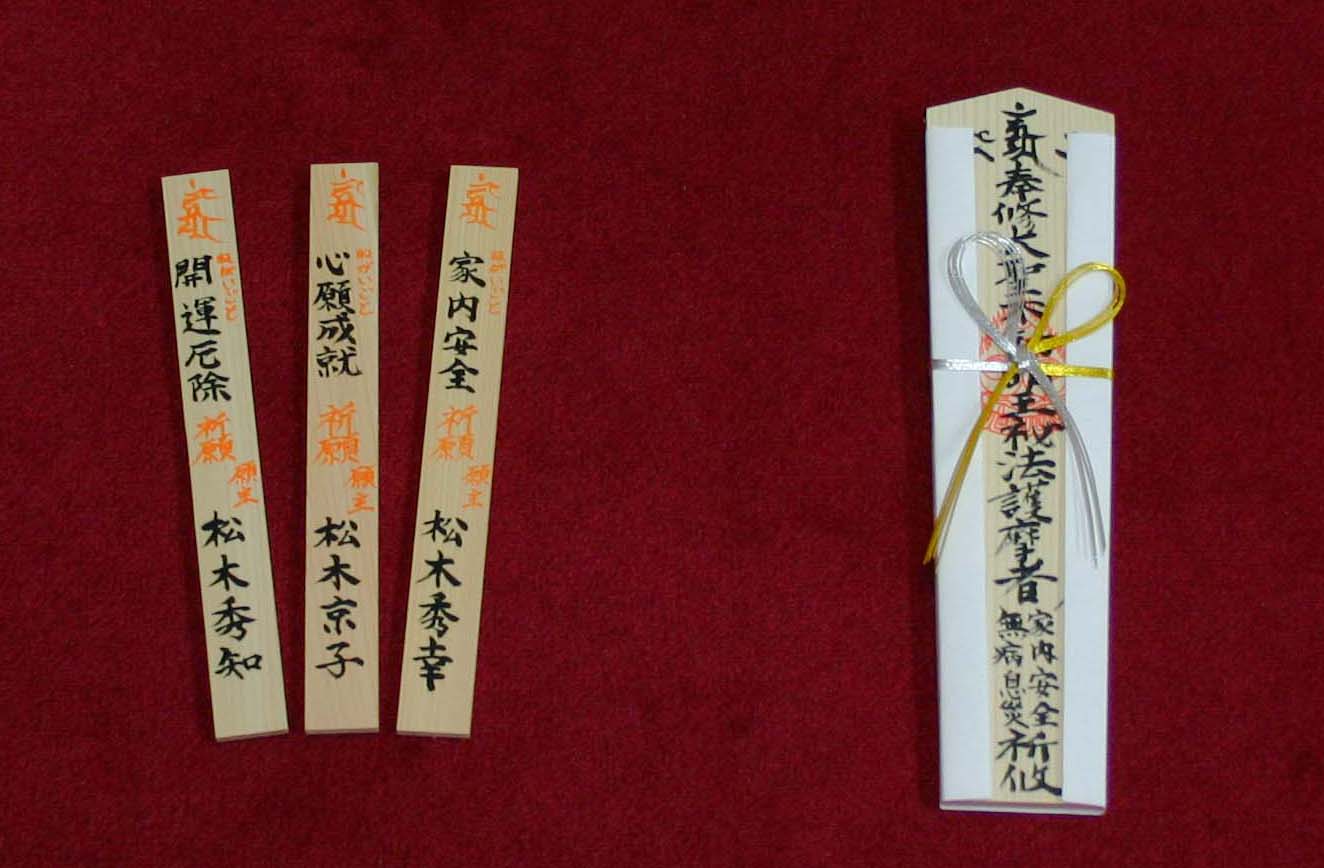
arrow ceremony. Afterwards, a bonfire made up of gomafuda,
brushwood and firewood was started.
While chanting a sutra, a barefoot priest
crossed the fire, waving a katana overhead. Shrine visitors continued walking
the flames as well, praying for health and peace of mind.
The ritual of visitors offering
their old, used brushes=Egaraten Shrine
Celebrating the God of Scholarship, Sugawarano Michizane, a brush
memorial service was held on the 25th, at the Nikai Hall of Kamakura
City's Egaraten Shrine. A New Year's tradition, where old, used brushes and
pencils are placed into a bonfire.
Calligraphers and students preparing for their
exams brought a total of 3000 brushes and pencils, adding them to the flaming
hibachi in front of the main worship hall.
Within the temple grounds, emas written with prayers for the exams are
set up. A bell could be heard ringing, as visitors clasped their hands and
prayed at a sacred fire for progress in calligraphy and for passing exams.
A yamabushi drawing a sanskrit character with a torch=Ryōgaku Temple, Mount Akiba, Itabashi, Odawara City
The Mount Akiba Fire Protection Festival took place on the evening of the 6th, conducted by the Ryōgaku Temple of Itabashi, Odawara City. The annual event features a traditional ceremony to burn off one's sins and impurities accumulated over the past year and welcome a prosperous New Year.
After 7:00PM, 30 fully dressed Buddhist priests gather from all over Japan. In a ceremonial dance, Sanskrit characters are drawn in the air with a torch, which acts as an amulet cut off worldly desires and cleanse the area. As the yamabushi continued, temple visitors walked barefoot over flames placed on the ground, praying for health and wellness.
Original text:
伝統行事「秋葉山火防祭」、繁栄願い火の舞/小田原
2012年12月7日
On August 15, the Daimonji Bonfire was held in prayer of world peace and to comfort the souls of those lost in the war. Held on Takamado Mountain in the Byakugo-ji Temple Town of Nara City, people prayed as the 大 character could be seen floating in the night sky.
The Nara Daimonji Bonfire, a fire prayer festival for fallen soldiers and eternal world peace, began in 1960. A special location was set up in Nara Public Park, where the Puja Ritual was performed for the spirits of the prefecture’s 29,243 fallen soldiers. Afterwards at 8:00PM, the fire beds were lit and the 大 character could be seen floating in the former capital’s night sky.
No other festival in Japan has Chinese characters this large being lit up. The first covered 109 meters, the second 164 and the 3rd 128.
A hill burning event on the susuki grass plains of Sengokuhara, Hakone
On the 14th, an annual hill burning event took place over the expansive, 44.5 acre susuki grass field of Sengokuhara, Hakone, .
A snowfall abruptly stopped at 11:00AM, leaving the plains blanketed in a fine layer of powder. 190 from the town's fire fighting department divided work in ignited the dead leaves under it. Gradually, the flames increased until a roaring bass could be heard. The stretch of land was left charred black as the fire ran through it.
The goal of the hill burning is to burn off shrubbery, maintaining the vegetation and scenery. Beginning in 1989, the event was suspended for the first time last year due to the impact of the Eastern Japan disaster, returning a year later in 2012.
During the fall, the ends of plains' flowing susuki grass turns golden colored. The spot is known for being chosen as one of the 50 scenic points of Kanagawa.
The fire protection festival, where large numbers of people came to visit the Manpuku Temple of Nakazato, Odarawara city
On the 28th, the spiritual training ritual of crossing fire was held at the Manpuku Temple of Nakazato, Odarawara city. Known as the "Festival of defending against fire", Buddhist monks walked barefoot over the flames. Large numbers of people arrived at the temple, to wish for health and safety for themselves and their family.
At the temple, summoned by the howl of the Horegai trumpet, priests outfitted in Yamabushi clothing assemble together. After discussion amongst themselves, a mountain of Ogoma (Japanese site) and decorative ropes roughly the height of a human is set ablaze. Visitors to the temple write down their prayers for future events on wood, throwing it into the fire.
After the strength of the blaze weakened, temple visitors proceeded to join hands and cross over it themselves, wishing for a year of good health.
The Brush Memorial Service was held on the 25th, at Nikai Hall of Egara Temple, Kamakura City. In prayer of improved scholastic and calligraphy ability, old, used brushes and pencils are thrown into a fire.
Beforehand, 2,000 old pencils and brushes are gathered. After a religious ceremony is performed in front of the main temple, on that same day temple visitors come together. bringing the writing instruments. One after another, they throw them into the middle of a cleansing fire. Allowing gratitude to enter their hearts, they join hands.
On the night of the 14th, a grand Sagicho burning event took place on Kitahama beach in the town of Oiso. Followed since the Edo period, the Sagicho event has been appointed by the country as a folk cultural asset of immeasurable importance.
Townspeople gathered such things as rope decorations used at New Year's and Daruma, tying them to the 10 foot sagichos. At once, all nine sagichos were lit on fire at the front and back with conical shaped "Saito" (ceremonial torches). As the bright red flames rose, the chilly winter air illuminated.
Townspeople and tourists visit the sandy beaches to see the fire festivals of Little New Year. Using the flames of the Saito torches, they cook Dango and Mochi, stuffing their faces in request for a healthy and safe year ahead.
(Note: Little New Year is an additional Japanese holiday period, taking place primarily on the 15th and the days surrounding it.)
Caption: Onbe Burnings, to be conducted on each part of East Yokosuka beach in the early morning.
To pray for the safety of one's family and self in the new year, the traditional Onbe burning event will be conducted on January 8th, taking place on Kuri Beach and Nobi shore of the East Yokosuka coastal area.
Bamboo is bundled into an 8 meter high tower, and decorated for the year with pine branches and Shimenawa. The first calligraphy of the year is written upon an object washed ashore, which is burned in the fire festival. A tower of bamboo is then lit on fire. As the flames continue growing, the sound of the bamboo crackling and bursting also strengthens. At the beach of the early morning, the flaming tower rises.
"Sending back the Gods of the New Year" is considered the meaning of the festival. The Onbe burning is also called different names depending on the region (Dondo burning and Sagichou). The "Cooking upwards" fire has mochi (cakes of pulvarized rice) being cooked and eaten. Legend tells that the festival will prevent one from catching a cold for one year's time, and the burning of the first year's calligraphy will improve one's own calligraphy skills.
In addition to Nobi shore, the festivals will take place in Shimo, East Nobi and Nakamura. Each year on these days, at around 6 at the morning, large groups of people gather and arrange for food to be catered. The Kuri beach fire will take place at about 10:00AM from Nagase. Two spots at the front of Perry Park will conduct Onbe burnings.
The events at Kumano temple of Nagasawa Beach and Nagaoka City for the 15th are still being scheduled. Check the website to confirm details.
Original text:
横須賀の海辺で「おんべ焼き」-無病息災願う伝統行事
2012年01月07日
The annual festival to exorcise misfortune and bring in a prosperous new year by imploring the power of fire took place on the night of December 6th, held by the Ryōgaku Temple on Mount Akiba, Itabashi, Odawara city. Approximately 30 mountain priests gather from around the country, the traditional ceremony being strictly performed during the night in the final month of the year.
Around 6:30 PM, with the area surrounded by darkness, kindling is piled and lit inside the temple grounds. After a dialogue between the mountain priests, bows and swords are cleansed according to etiquette, and Sanskrit characters are drawn with two torches. As a pilgrim places more fire onto the ground, the mountain priests continue to cross the ground barefoot, while praying for protection and health.
The protection-by-fire festival started thirteen hundred years ago, and has continued as a traditional event, conducted every year on December 6th.